

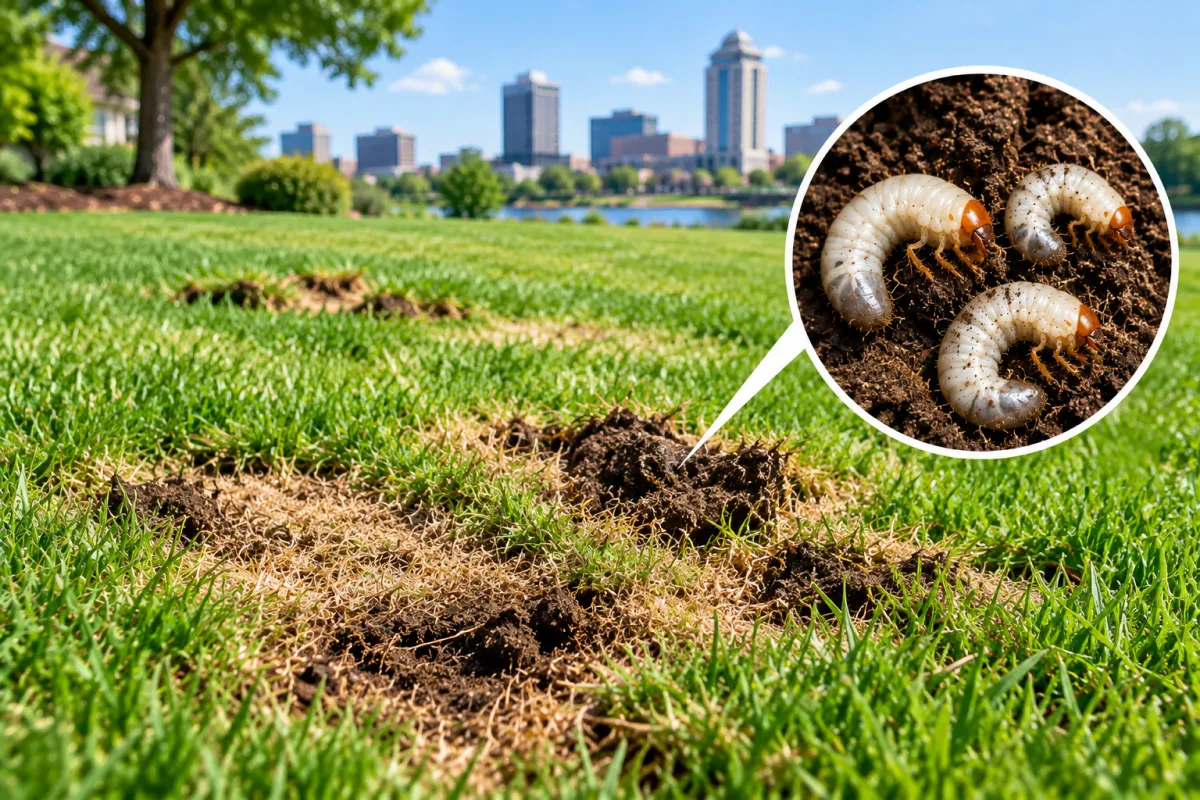
You watered all summer. You fertilized. You mowed every week. Then August rolls around, and mysterious brown patches start spreading across your Wichita lawn.
Before you assume it’s simply Kansas heat or drought, look beneath the grass.
White grubs are C-shaped beetle larvae that live in the soil and feed on grass roots. Depending on the species, they can be associated with beetles such as June beetles, Japanese beetles, and masked chafers. When grub populations become high enough, the resulting root damage can make turf look drought-stressed, loose, thin, and brown.
For homeowners in Wichita, Derby, Andover, Maize, and throughout Sedgwick County, knowing how to identify grub damage early can mean the difference between treating a localized problem and repairing large sections of dead lawn.
Sign 1: Your Turf Feels Spongy Underfoot
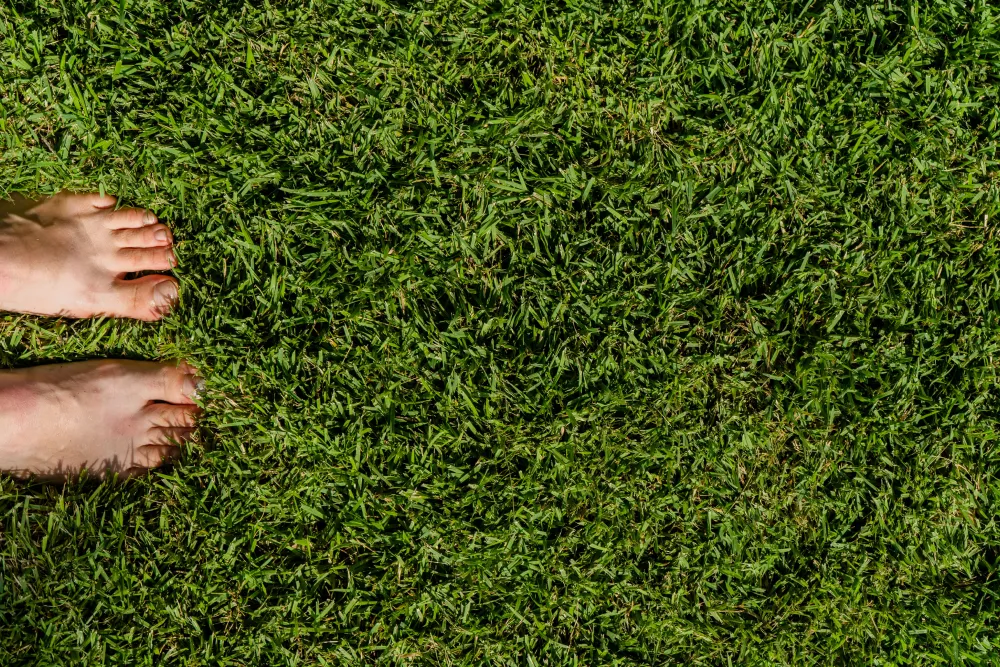
One of the easiest signs to check requires no tools at all.
Walk across the affected area of your lawn. Healthy turf should feel relatively firm and anchored to the soil. When grubs consume enough of the root system, sections of grass can begin feeling soft, bouncy, or spongy underfoot.
Pay particular attention if:
- Brown patches are appearing in otherwise healthy turf.
- The affected grass feels different from surrounding areas.
- Watering doesn’t seem to improve the color.
- The lawn feels loose when you walk across it.
- The turf appears thin or stressed despite regular maintenance.
The spongy feeling isn’t proof of a grub infestation by itself. Wichita lawns can develop similar symptoms from drought, disease, irrigation problems, soil compaction, or other stresses.
But when spongy turf appears alongside the other warning signs in this guide, it’s time to investigate below the surface.
The Greener Side notes that Wichita lawns face a combination of hot summers, cold winters, fluctuating rainfall, and clay-heavy soils, all of which can complicate lawn diagnosis.
Sign 2: Try the “Rolled Carpet Test”
This is one of the most useful DIY checks for severe grub damage.
Imagine your lawn as a carpet. Healthy grass has a dense root system holding that carpet firmly against the soil. If grubs have consumed much of the root system, the turf can become surprisingly easy to lift.
How to Perform the Rolled Carpet Test
Find a brown or declining section of turf and:
- Grab a handful of grass near the edge of the damaged area.
- Pull upward firmly.
- Notice how much resistance you feel.
- Try the same thing in a healthy section for comparison.
If the healthy grass stays firmly anchored but the damaged section lifts upward easily, almost like a loose piece of carpet, that’s a major warning sign.
Severely grub-damaged turf may peel back with very little resistance because the roots that normally anchor it have been eaten.
Don’t Stop at the Carpet Test
The rolled carpet test tells you that something may have damaged the roots. It doesn’t identify the pest by itself.
To confirm whether white grubs are actually responsible, inspect the soil underneath the damaged turf.
Sign 3: Animals Are Suddenly Digging Up Your Yard
Sometimes the first creature to diagnose your grub problem isn’t you—it’s a skunk.
Skunks, raccoons, birds, and other wildlife may feed on insects and larvae living in the soil. If animals suddenly start tearing into specific sections of your lawn, there may be something underneath worth investigating.
Watch for These Warning Signs
Look for:
- Small holes appearing overnight.
- Torn or flipped sections of turf.
- Skunks repeatedly visiting the same areas.
- Raccoons digging through the grass.
- Birds concentrating on particular sections.
- Freshly disturbed soil around brown patches.
Animal activity isn’t definitive proof of grubs. Wildlife can dig for a variety of insects and food sources.
However, wildlife activity plus loose, brown, or spongy turf is a strong reason to perform a soil inspection.
And there’s another problem: animals looking for grubs can cause substantial secondary damage to an already stressed lawn.
Sign 4: Your Brown Grass Doesn’t Recover After Watering
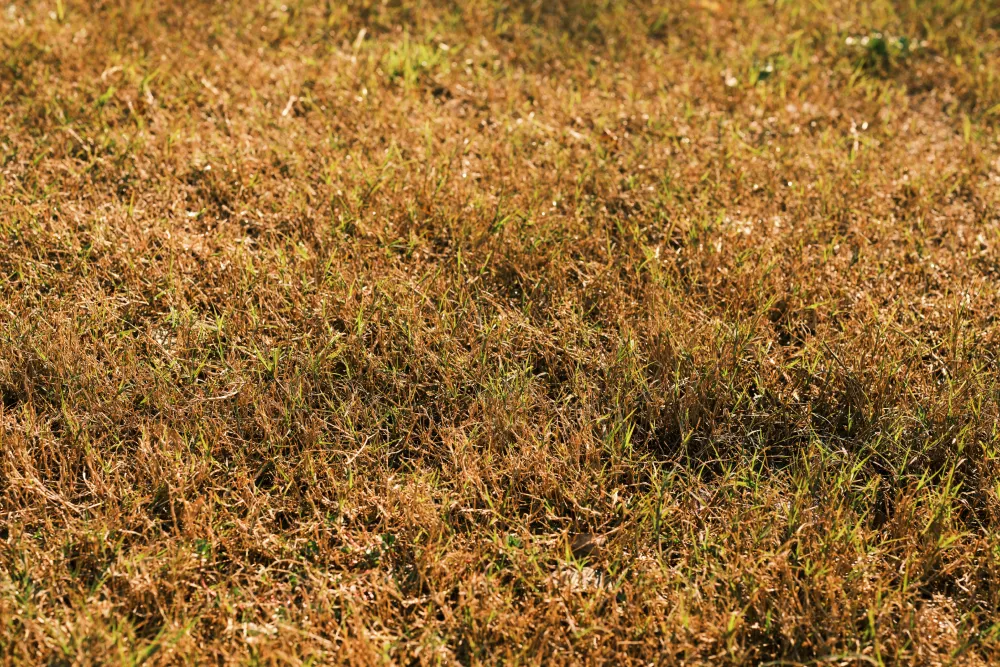
Kansas heat can make lawn diagnosis difficult.

A lawn suffering from drought stress may turn brown or develop a grayish appearance when it isn’t receiving enough moisture. But if you correct the watering problem and the grass continues declining, something else may be happening.
Grub damage can mimic drought stress.
Why Grubs Make Grass Look Thirsty
Grass depends on its roots to absorb water and nutrients.
When grubs consume a significant portion of those roots, the remaining turf may no longer have enough functioning roots to use the water you’re applying. You can run the sprinkler over the brown patch repeatedly and still see little improvement.
That is why more water isn’t always the answer.
If you’ve been watering properly but specific areas continue to decline, inspect the root zone before simply increasing irrigation.
For Wichita lawns, proper watering is particularly important because heavy clay soil can absorb water slowly and compacted areas may develop runoff or uneven moisture distribution.
How to Do a Grub Count: The 1-Square-Foot Dig
If you want to move beyond visual clues, get a shovel.
A 1-square-foot grub count gives you a much better idea of what’s happening underneath your turf.
Step-by-Step Grub Inspection
Choose an area where brown or declining turf meets healthier grass.
Then:
- Measure a section approximately 1 foot by 1 foot.
- Cut through the turf with a shovel or spade.
- Carefully lift the square.
- Inspect the upper root-zone soil, roughly the top 2 to 4 inches.
- Break apart the soil and look for creamy-white, C-shaped larvae.
- Count the grubs you find.
- Compare the result with another section of your lawn if necessary.
What Does Your Grub Count Mean?
The numbers homeowners often hear are 1–4 grubs per square foot versus 5–10+ grubs per square foot, but there isn’t one universal treatment threshold for every lawn.
Treatment decisions can vary based on turf species, grub species, grub development stage, existing turf damage, and the time of year.
Use the following as a diagnostic guide—not a universal pesticide threshold:
If you’re finding numerous grubs—especially when the turf is loose, brown, or lifting easily—don’t wait for the entire lawn to deteriorate.
Treatment: Preventative Grub Control vs. Curative Treatments
Once you’ve confirmed that grubs are present, the next question is whether you should treat.
The answer depends on what kind of grub you’re dealing with, its life stage, the population, and how much damage has already occurred.
Preventative Grub Control
Preventative grub control is designed to target susceptible grub stages before they become large enough to cause significant root damage.
Timing is critical. Preventative applications are generally made during the appropriate spring or early-summer window for the target pest and product.
That’s why waiting until August or September to look for damage can put a homeowner behind the curve.
Curative Treatments
By late summer or fall, homeowners may already be seeing the results of grub feeding.
Curative treatments are intended for existing grub populations, but effectiveness depends on the pest species, grub life stage, timing, active ingredient, and application method.
In other words, don’t automatically grab an insecticide and blanket the entire lawn.
Identify the problem first.
If an active infestation is confirmed, The Greener Side’s Wichita-focused lawn care approach can be a useful starting point for getting the lawn evaluated and determining what treatment or broader lawn-care strategy is appropriate.
You can also explore the company’s Wichita lawn care services for ongoing turf maintenance and treatment support.
Treating Grubs Is Only Half the Job
Getting rid of the grubs doesn’t magically bring dead grass back to life.
If the larvae have destroyed a significant portion of the root system, some areas may need to be repaired after the pest problem has been addressed.
Start With the Right Recovery Strategy
For damaged cool-season turf, fall can be an important recovery window.
The Greener Side’s Wichita lawn-care calendar identifies September and early October as prime timing for aeration and overseeding of cool-season lawns, when warm soil and cooler air support establishment.
A recovery program may include:
- Core aeration
- Overseeding
- Appropriate fertilizer
- Correct irrigation
- Improved mowing practices
- Continued pest monitoring
The goal is to rebuild turf density rather than simply cover the symptoms.
For homeowners dealing with thin or damaged areas after pest problems, The Greener Side’s broader lawn-care resources emphasize fall aeration and overseeding as an important part of lawn renovation.
Protect Your Lawn After the Grubs Are Gone
Grub control shouldn’t be treated as an isolated event.
A lawn that’s already stressed by compaction, poor irrigation, nutrient problems, improper mowing, or other pests can be more difficult to maintain.
Consistent lawn care makes it easier to catch problems before they become major repairs.
The Greener Side provides ongoing Wichita lawn services including weekly mowing, fertilization and weed control, irrigation support, and lawn renovation services.
For homeowners who want a more hands-off approach, a comprehensive lawn care maintenance plan can help coordinate seasonal maintenance instead of treating every brown patch as a separate emergency.
White Grub Inspection Checklist
Before calling the problem “drought,” walk through this quick checklist:
- Are there unexplained brown patches?
- Does the affected turf feel spongy underfoot?
- Does damaged turf lift easily like a carpet?
- Are skunks, raccoons, or birds digging in the affected areas?
- Has watering failed to improve the brown grass?
- Can you find C-shaped larvae beneath the turf?
- Are you finding numerous grubs in a 1-square-foot inspection?
- Is the damage continuing to spread?
- Does the lawn need aeration or overseeding after treatment?
The more boxes you check, the more reason you have to investigate the root zone rather than simply adding more water or fertilizer.
Don’t Let White Grubs Destroy Your Wichita Lawn
Brown grass in August or September isn’t automatically a watering problem.
If your Wichita lawn feels spongy, lifts like a loose carpet, refuses to recover after watering, or has suddenly become a buffet for skunks and raccoons, investigate what’s happening beneath the surface.
White grubs can damage a lawn’s root system before the homeowner realizes what’s happening. Early identification gives you a better opportunity to address the pest and repair damaged turf before the problem becomes much larger.
The Greener Side is locally owned and operated in Wichita and serves surrounding communities with lawn care, fertilization and weed control, irrigation services, mowing, and lawn renovation.
Ready to stop guessing? Schedule a lawn inspection in Wichita and have the lawn evaluated for grub activity, turf damage, irrigation issues, and the next steps for recovery.
Your lawn has already survived another Kansas summer. Don’t let an underground pest turn a few brown patches into a complete lawn renovation.