


You walk outside in June or July, look across your lawn, and notice it: light-green, wide-bladed grass spreading through your beautiful turf. A few patches have turned into dozens. Before long, crabgrass is competing with your Tall Fescue or Bermuda for sunlight, water, and nutrients.
If you missed your spring pre-emergent application, take a breath. It happens to homeowners across Wichita, Derby, Andover, Maize, and Sedgwick County every year.
Missing the early spring window does not mean your lawn is lost. It simply means the strategy needs to change from preventing germination to controlling weeds that have already emerged.
Here is what actually works when crabgrass has taken hold in a Kansas lawn.
Why Pre-Emergent Won’t Fix Crabgrass That Has Already Sprouted
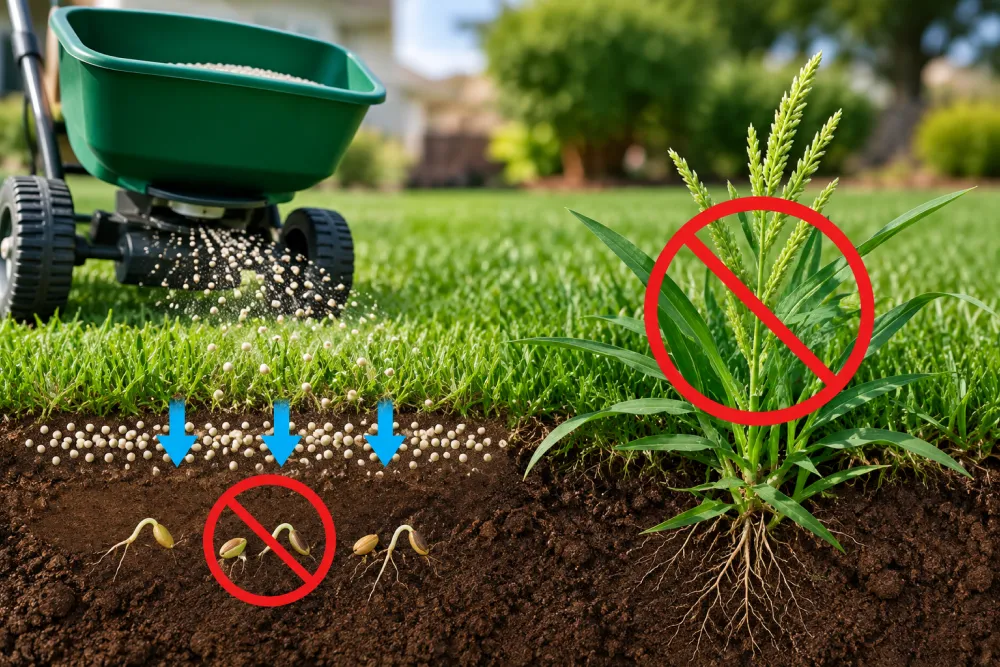
Pre-emergent herbicides work by creating a barrier in the upper layer of soil. When crabgrass seeds begin germinating, the barrier interferes with their development before they can establish themselves.
Timing is critical.
In Wichita, crabgrass prevention generally needs to happen before soil temperatures consistently reach approximately 55°F. The Greener Side’s spring lawn care guidance identifies late February through early April as the typical application window, depending on seasonal conditions.
Once crabgrass has emerged and developed roots, however, that preventative barrier cannot kill the established plant.
Think of it this way:
- Pre-emergent: Stops susceptible weed seedlings before they establish.
- Post-emergent: Targets weeds that are already growing.
- Cultural practices: Help desirable turf compete against future weed growth.
If your lawn is already showing crabgrass, the next step is targeted control—not another application of prevention alone.
Strategy 1: Apply Selective Post-Emergent Herbicides
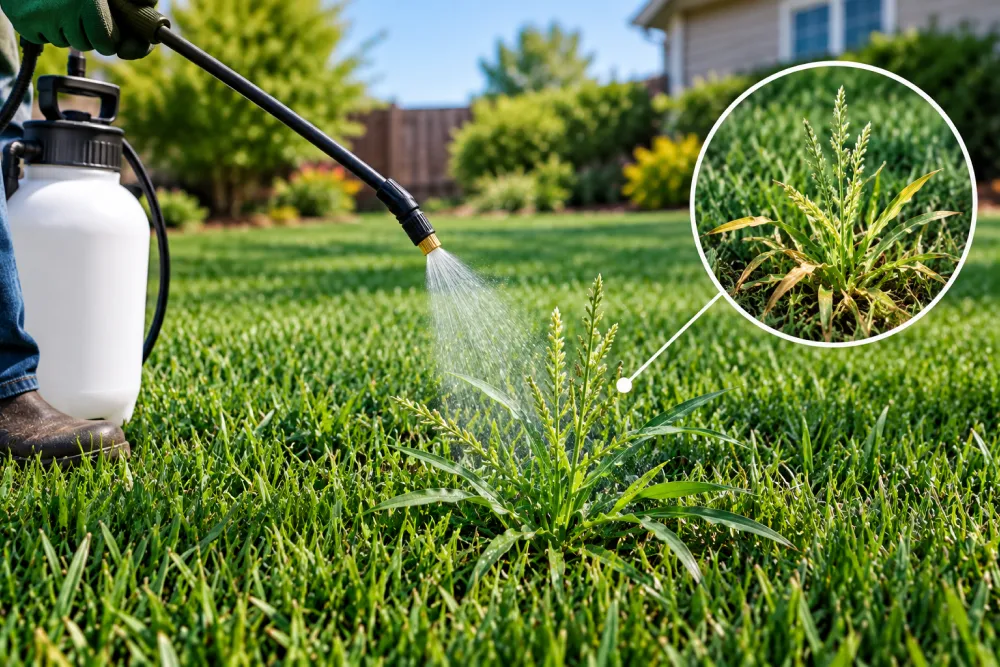
When crabgrass is actively growing, a selective post-emergent herbicide may help control it without destroying your desirable grass.
One commonly used active ingredient is quinclorac, which is labeled for crabgrass control in certain turfgrass settings.
The important word is selective. Not every weed killer is safe for every grass type.
Why Selectivity Matters
Your lawn may contain Tall Fescue, Bermuda, or a mixture of turfgrass varieties. Each has different herbicide tolerances.
Before applying any product:
- Confirm that the label specifically lists your grass species.
- Verify that crabgrass is listed as a target weed.
- Follow the labeled application rate and repeat-treatment interval.
- Check temperature restrictions and other environmental precautions.
- Avoid spraying drought-stressed or otherwise weakened turf.
A product that is appropriate for one lawn may damage another. Always follow the product label, which is the controlling guide for permitted uses and application conditions.
Don’t Spray During Peak Kansas Heat
This is where many homeowners run into trouble.
Applying herbicide during extreme summer heat can increase the risk of turf injury, especially when grass is already struggling with drought or high temperatures.
When the product label permits, cooler early-morning or evening conditions may reduce heat-related stress. However, time of day does not override temperature restrictions or other label directions.
Mature crabgrass can also be harder to control than young seedlings. Large plants may require a properly timed follow-up application, if permitted by the label.
For homeowners who would rather avoid trial and error, professional weed control services can help match the treatment to the weed, grass type, and current lawn conditions.
Strategy 2: Mow High and Water Right
Herbicides address existing weeds, but your everyday lawn care habits influence how much room crabgrass has to spread.
A thin lawn with exposed soil gives crabgrass an opportunity to establish. A dense lawn makes that opportunity harder to find.
Keep Tall Fescue at the Right Height
For established Wichita Tall Fescue, a mowing height around 3.5 to 4 inches during summer can help protect the turf.
Taller grass shades the soil surface, reducing the light available to emerging crabgrass seedlings. It also helps protect the soil from rapid moisture loss.
Follow these mowing practices:
- Maintain a higher summer mowing height for Tall Fescue.
- Never remove more than one-third of the grass blade in a single mowing.
- Keep mower blades sharp to avoid tearing the turf.
- Avoid scalping thin or heat-stressed areas.
- Adjust mowing height for Bermuda according to its variety and maintenance needs.
Important: Taller mowing helps suppress new crabgrass pressure, but it will not eliminate mature plants already growing in the lawn.
Water Deeply Instead of Lightly Every Day
Shallow, frequent watering encourages roots to remain close to the surface. That leaves turf more vulnerable when Wichita temperatures climb.
Most established Wichita lawns need approximately 1 to 1.5 inches of total water per week, including rainfall, although actual requirements vary by grass type, weather, soil, and lawn condition.
A practical starting point is:
- Water deeply over 2–3 days when permitted and needed.
- Irrigate early in the morning, ideally around 4–8 a.m.
- Account for rainfall before running sprinklers.
- Use shorter cycles with soaking intervals if water runs off heavy clay.
- Check soil moisture instead of following a rigid timer.
Wichita’s clay-heavy soil can absorb water slowly. Running sprinklers too long in one uninterrupted cycle may send water down the driveway rather than into the root zone.
For more detail, see The Greener Side’s guide to how often to water your lawn in Wichita.
Strategy 3: Let Fall Lawn Restoration Do the Heavy Lifting
Here is some good news: crabgrass is an annual summer weed.
It completes its life cycle during the growing season and generally dies after a hard freeze. The plant you see spreading through your lawn now will not remain green all winter.
However, its seeds can remain in the soil and germinate in future seasons.
That is why fall lawn restoration is so important.
Why September and October Matter
For Wichita Tall Fescue lawns, early fall provides a valuable opportunity to repair thin areas and build turf density.
Cooler air temperatures and warm soil support grass establishment, while reduced summer heat makes it easier for new seedlings to survive.
A fall restoration plan may include:
- Core aeration: Relieves compaction and creates openings for seed and water.
- Overseeding: Introduces desirable grass into thin or damaged areas.
- Appropriate fertilization: Supports establishment and root development.
- Consistent establishment watering: Keeps new seed moist according to its needs and local watering requirements.
- Proper mowing: Protects young grass as it becomes established.
The goal is to fill the open spaces where crabgrass would otherwise take hold next spring.
Explore fall core aeration and overseeding as part of a longer-term plan to improve turf density and lawn health.
What About Bermuda Lawns?
Bermuda is a warm-season grass and follows a different seasonal growth pattern from Tall Fescue.
Do not automatically apply a Tall Fescue overseeding schedule to Bermuda. Fall renovation timing, seed selection, and treatment decisions should match the existing turf and the homeowner’s goals.
Strategy 4: Put Next Spring’s Pre-Emergent on Your Calendar
Once you have controlled this year’s crabgrass, the next objective is to prevent another widespread outbreak.
For Wichita homeowners, late winter through early spring is the planning window for crabgrass prevention. The exact application date should follow soil temperatures and seasonal conditions—not just a date on the calendar.
Your Wichita Crabgrass Prevention Timeline
| Season | What to Do | Main Goal |
|---|---|---|
| Late February–March | Monitor soil temperatures and plan pre-emergent | Prepare before germination |
| March–early April | Apply labeled pre-emergent at the appropriate time | Prevent crabgrass establishment |
| April–May | Inspect for breakthrough weeds | Catch problems early |
| June–July | Maintain mowing, irrigation, and targeted weed control | Limit summer spread |
| September–October | Aerate and overseed suitable Tall Fescue lawns | Build a thicker lawn |
| Late fall–winter | Review results and plan next season | Improve consistency |
The Greener Side offers a structured 6-step fertilization and weed control plan for cool-season lawns, with treatment timing designed around Wichita’s growing conditions.
A coordinated annual lawn maintenance program can help homeowners avoid the common cycle of missing prevention, battling mature weeds, and repairing damage every fall.
Common Mistakes to Avoid When Crabgrass Is Already Growing
A few well-intentioned decisions can make a crabgrass problem harder to manage.
1. Applying More Pre-Emergent to Kill Existing Plants
Pre-emergent is designed for prevention, not killing established crabgrass. Use a product labeled for post-emergent control when active weeds are present.
2. Spraying During Extreme Heat
High temperatures and drought stress can increase the risk of turf injury. Check label restrictions and lawn conditions before applying herbicides.
3. Cutting the Lawn Too Short
Scalping exposes soil and weakens desirable turf. Maintain an appropriate mowing height for your grass species.
4. Watering Every Day Without Checking Soil Moisture
Frequent shallow watering can encourage shallow roots and waste water through runoff. Water according to actual lawn needs and Wichita’s applicable watering schedule.
5. Expecting One Treatment to Fix Everything
Large, mature crabgrass plants may be more difficult to control. Treatment results depend on species, plant maturity, product selection, weather, and application quality.
6. Skipping Fall Repair
Even after crabgrass dies, bare areas can remain. Leaving those areas unaddressed gives future weed seedlings room to establish.
When Should You Call a Professional?
DIY treatment can work for small, manageable outbreaks. Professional help becomes especially useful when crabgrass is widespread or the lawn is already stressed.
Consider a lawn assessment if:
- Crabgrass has spread across multiple sections of your yard.
- You are unsure whether the weed is crabgrass or another grassy weed.
- Your Tall Fescue is thinning or showing heat damage.
- Previous herbicide applications have not produced the expected results.
- You want to combine summer weed control with a fall restoration plan.
- You need a coordinated prevention schedule for next spring.
A lawn professional can evaluate the grass species, weed maturity, turf condition, and application timing before recommending a treatment approach.
Take Back Your Wichita Lawn Before Crabgrass Spreads Further
Missing pre-emergent timing is frustrating, but it does not mean you have to surrender your lawn to crabgrass.
The immediate plan is straightforward: identify the weed, use an appropriate labeled post-emergent treatment when conditions allow, maintain healthy mowing and irrigation practices, and plan fall restoration where needed.
Then get ahead of next spring with properly timed prevention.
Whether your property is in Wichita, Derby, Andover, Maize, or a nearby Sedgwick County community, The Greener Side can help you build a lawn care plan around local conditions.
Don’t spend another summer guessing which product to use. Contact our Wichita lawn care team to request a lawn assessment, discuss professional weed control, and plan your fall lawn restoration.
A thicker, healthier lawn starts with the right next step.